Downtown Plymouth Parking Does More Damage to Brakes Than Most Drivers Realize
Parallel spots, brick crossings, and hill starts around Kellogg Park wear pads and rotors faster than highway cruising ever will.
Finding a parking space near Kellogg Park on a Friday evening feels like a small victory. You squeeze between two SUVs, curb your wheels on a slight grade, and walk to dinner while your brake rotors continue cooling from the last dozen slow stops you made hunting for that spot. Downtown Plymouth was laid out for pedestrians and storefronts, not for three-point turns in a midsize crossover. Every hunter who tours the grid—Main Street, Liberty, Harvey—taxes friction material in ways that never appear in highway-focused marketing for ceramic pads. West Wayne County drivers who split life between walkable downtown errands and I-275 commutes often discover their brakes need attention at thirty thousand miles instead of fifty.
Stop-and-Creep Patterns That Eat Friction Material
Urban brake wear is thermal as much as mechanical. Repeated applications from twenty miles per hour to zero without sufficient cooling glaze rotors and crystallize pad compounds. Brick and cobblestone crossings near downtown intersections add vibration that loosens abutment clips; rattles become click-track soundtracks on reverse parking maneuvers. Hill starts on streets sloping toward the park require hold-and-release technique that rides the clutch on manuals and loads caliper pistons on automatics. Each hold generates heat at the pad contact patch. Drivers who ride the brake pedal while creeping forward in festival traffic multiply the effect. None of this registers on a odometer, but technicians measure it in millimeters of pad remaining.
Parallel parking itself is a brake event. Rolling backward while steering loads the rear shoes on drum-equipped older cars and the rear pads on modern four-wheel-disc systems common on Livonia and Northville commutes into Plymouth. Drivers who tap the accelerator and brake alternately while aligning with the curb create micro-skids that transfer pad material unevenly onto rotors. The result—pedal pulsation at sixty on I-275—often gets blamed on freeway driving when the root cause was twenty downtown parking sessions.
Event parking for Kellogg Park concerts and Art in the Park weekends concentrates thousands of vehicles into grids never sized for modern SUVs. Ride-share drop-offs add double-parking stops that heat front calipers while rear drums cool unevenly on older taxis still serving Metro Detroit. Tow trucks idling with parking brakes set on grades near Liberty Street transfer heat into rear shoes differently than hydraulic hold at traffic lights. Understanding these micro-environments helps Plymouth owners interpret advisor photos when inner pads show three millimeters and outer pads show seven on the same axle.
Rotors, Calipers, and the Michigan Salt Factor
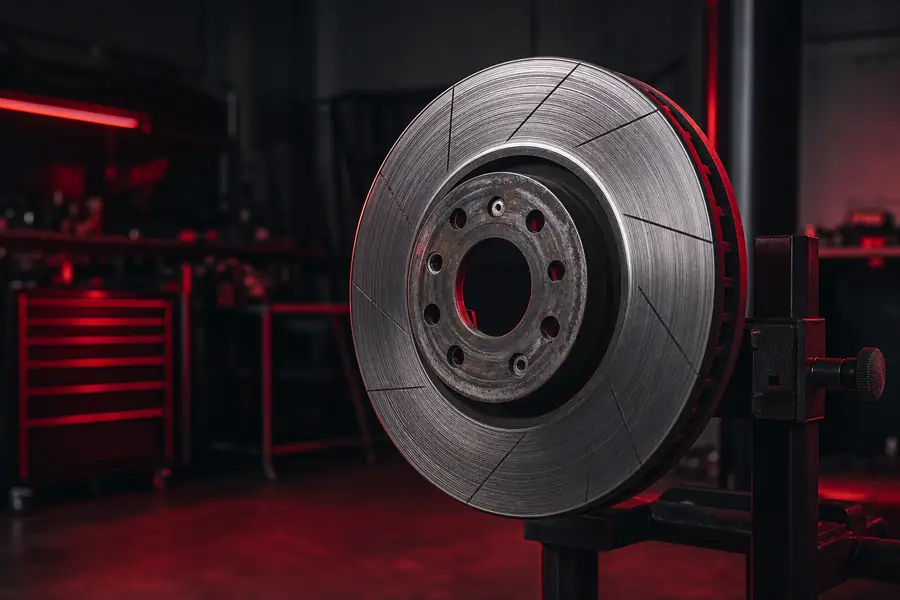
Plymouth's winter salt compounds downtown brake issues. Corrosion on caliper slide pins prevents even pad retraction; one pad wears to the backing plate while its twin looks nearly new. Rust ridges on rotor edges cause squeal that disappears when wet—a misleading signal that brakes are fine. After spring thaw, pulsation during downhill exits toward Sheldon Road indicates warped rotors from thermal shock: hot pads meeting slush puddles near storm drains on Main Street. Replacing pads without addressing seized hardware or resurfacing rotors guarantees a comeback within months.
A brake job that fixes only the pads—without cleaning caliper slides corroded by Michigan salt— is a temporary quiet, not a lasting repair.
Warning Signs Downtown Drivers Should Not Ignore
High-pitched squeal at low speed often means wear indicators touching rotors—a deliberate noise designed to arrive before metal-on-metal. Grinding eliminates all doubt and raises rotor replacement cost. A soft pedal after a cold morning may indicate moisture in brake fluid that boiled during yesterday's hill holds; fluid absorbs water over time and needs flushing every three years in humid garage environments. Pulling left or right under light braking suggests stuck calipers or uneven tire pressure unrelated to brakes but felt at the pedal. The ABS light combined with longer stops points to wheel-speed sensor faults or worn fronts on vehicles that weight-transfer heavily during downtown panic stops when pedestrians step into crosswalks near Penniman.
Inspection Intervals for Mixed Urban-Highway Use
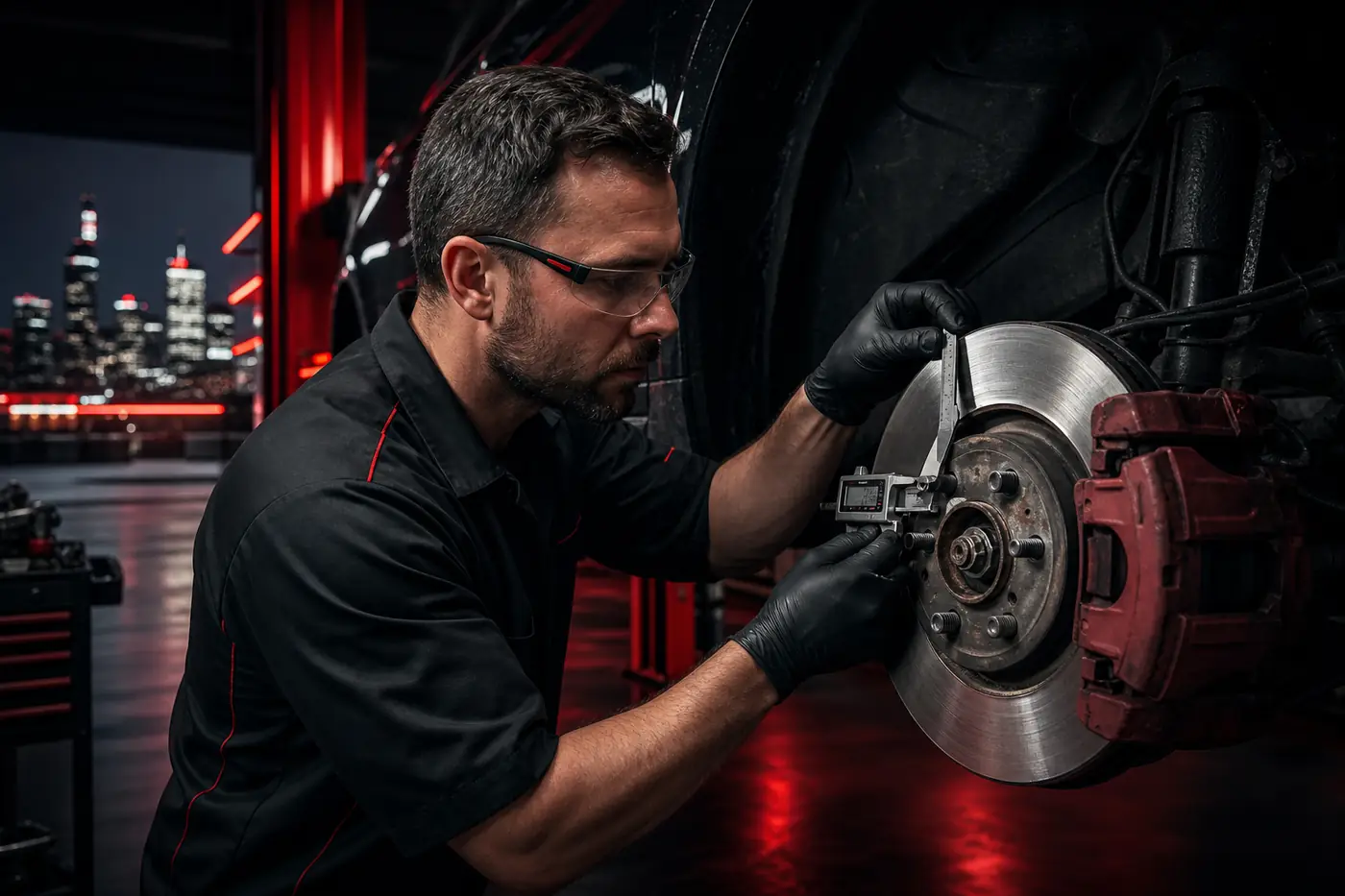
Annual brake inspection aligns with Michigan registration renewal for many Plymouth households. Twice-yearly checks make sense for drivers who daily downtown and rack up fewer than twelve thousand total miles—because pad wear tracks events, not distance. Measurements should include rotor thickness below minimum spec stamped on the rotor hat, not just pad depth. Hardware kits with new clips and abutment shims cost little relative to labor and prevent noise comeback. For hybrid and electric vehicles whose regenerative braking reduces pad use, corrosion on unused rear calipers still demands periodic exercise—something a qualified shop verifies during rotation.
Choosing Components That Match Plymouth Driving
Ceramic pads suit quiet operation for neighbors on residential streets near Old Village; semi-metallic compounds handle heat better for drivers who tow boats from Plymouth to lakes on summer weekends. Coated rotors resist rust between seasons, valuable when vehicles sit outdoors near Kellogg Park during weeklong festivals. Avoid the cheapest pad options on heavier crossovers; they fade faster during repeated hill descents toward downtown. Professional installation includes torque-spec lug nuts, bed-in procedures, and road tests that simulate both freeway and city braking.
Emergency stops on wet brick near downtown festivals test ABS modulation and tire grip simultaneously; worn pads extend stopping distance even when the computer pulses calipers correctly. Parents ferrying children between Plymouth schools and Livonia activities should treat brake inspection as parallel to seatbelt checks—not optional because miles look low. West Wayne County traffic enforcement and school-zone cameras assume your vehicle can halt within posted limits; friction material is the physical guarantee behind that assumption.
Wear Master Auto Super Center sees downtown Plymouth driving as a distinct wear category—not worse than highway use, simply different. Aligning brake service with how you actually park, creep, and hill-start around Kellogg Park keeps stopping power consistent whether you are merging onto I-275 or yielding to foot traffic on Main Street.