Historic Downtown Plymouth Puts Hidden Rust on Every Commuter's Radar
Salt, humidity, and stop-and-go traffic around Kellogg Park conspire against the metal you never see until it fails.
On a crisp morning along Main Street, the storefronts of downtown Plymouth look unchanged from the postcards sold near Kellogg Park. Drivers parallel park between the bakery and the bookstore, grab coffee, and head toward I-275 without a second thought about what sits beneath their floorboards. That blind spot is where Michigan winters do their quietest work. Salt brine sprayed across West Wayne County roads does not stop at the city limits; it creeps into frame rails, exhaust hangers, and brake lines long before rust becomes visible on fenders. For Plymouth residents who love the walkable downtown but commute north toward Northville or south toward Livonia, undercarriage corrosion is less a rural problem than a daily one.
Why Downtown Driving Accelerates What You Cannot See
Historic districts were not designed for modern traffic volumes. Short blocks, frequent stop signs, and tight turns around Kellogg Park mean brakes heat and cool in cycles that trap moisture against metal. Each stop pulls splash from melted snow into wheel wells; each slow crawl through parking lanes lets salt linger in seams where factory undercoating has aged out. Compared with open highway miles on I-275, downtown Plymouth driving is low speed but high exposure. Technicians at Wear Master Auto Super Center in Plymouth see the pattern every March: vehicles that never left the zip code still show perforated subframes because repeated thermal cycling turned trapped chloride into active rust.
Proximity to the freeway makes the problem worse, not better. Commuters who live near Old Village or the Penniman corridor often assume highway miles rinse salt away. In reality, the transition from salted municipal streets to dry interstate pavement creates condensation inside boxed sections of the frame. Water vapor collects, salt crystals concentrate, and oxidation begins in places no flashlight reaches without a lift. West Wayne County's freeze-thaw swings—common from November through April—expand tiny pits into flakes that eventually drop onto the shop floor during a routine oil change.
The Components Most Vulnerable Near Kellogg Park
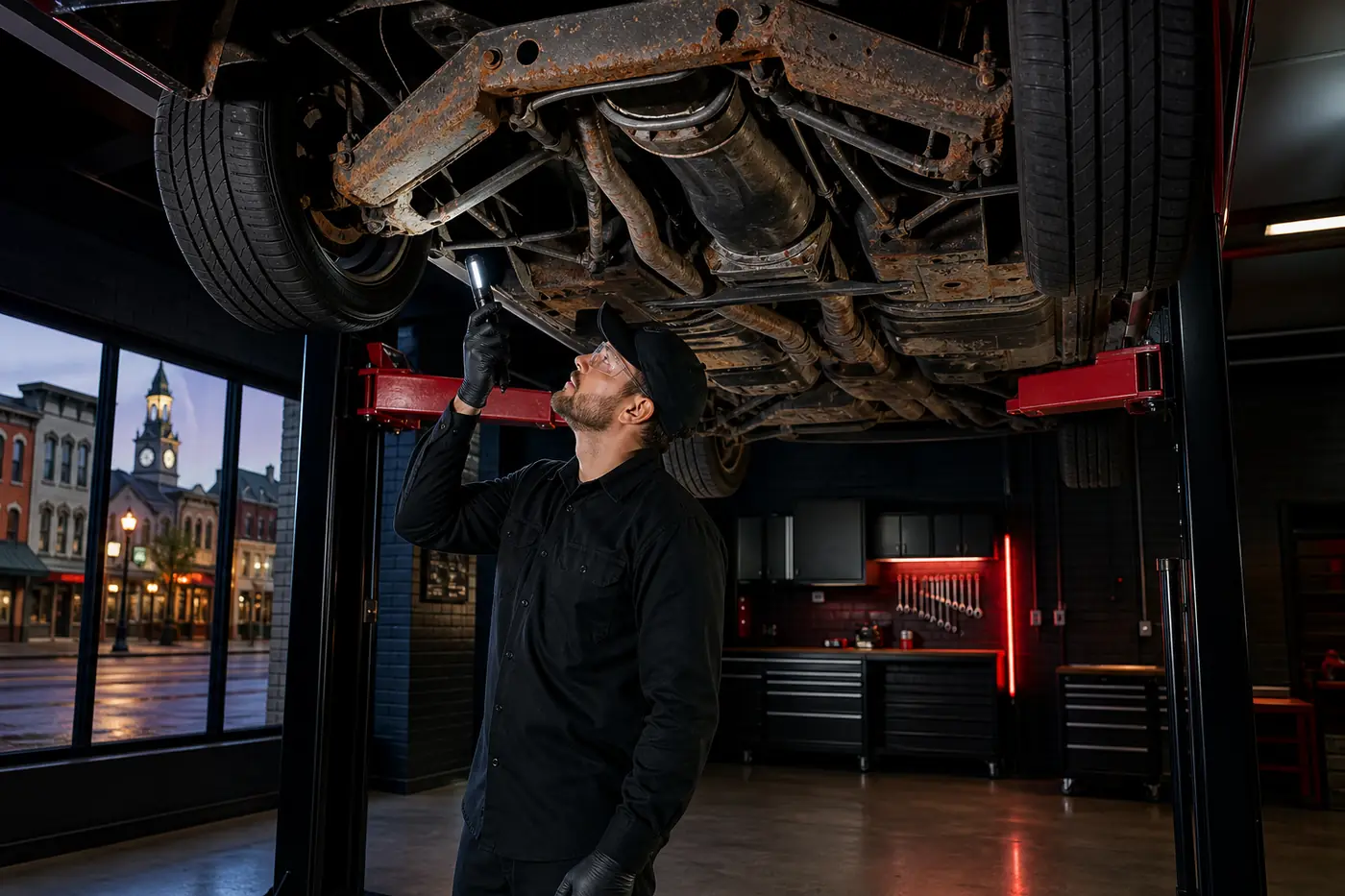
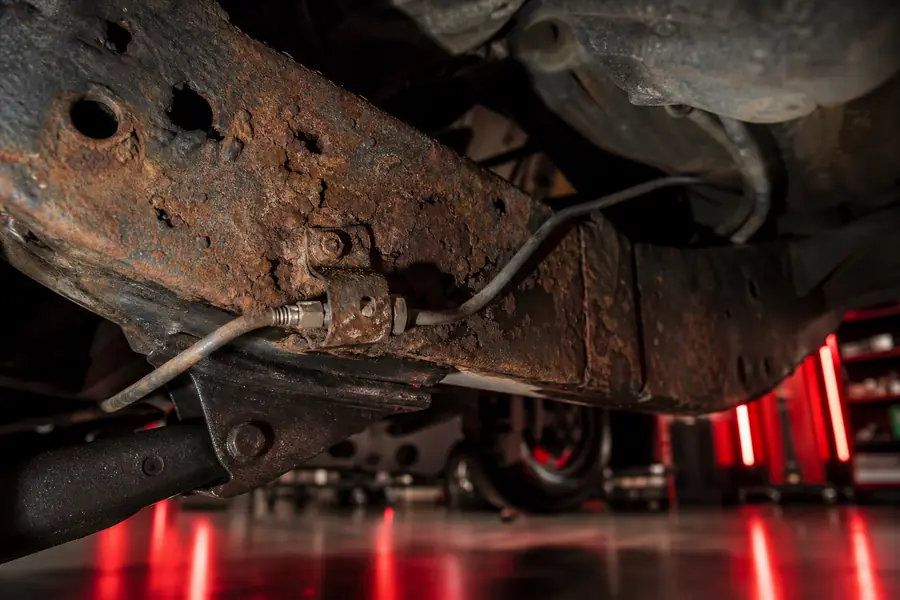
Brake lines rank first on any Plymouth undercarriage checklist. Steel lines routed along the inner rocker panels corrode from the outside in; a pinhole leak often appears only after the ABS warning light flickers or the pedal goes soft. Fuel and brake shields, designed to deflect road debris, become traps when their mounting clips rust through and hold wet mud against the tank. Exhaust systems suffer at hangers and flex joints where heat meets salt. Control arms and stabilizer links on front-wheel-drive sedans—the dominant vehicle in downtown parking structures—show torn boots that let grit into ball joints. None of these failures announce themselves with drama; they surface during alignment checks or when a clunk appears over the brick crossings near Liberty Street.
Rust on a Plymouth commuter car rarely starts on the body panels you wax—it starts in the boxed frame sections you never see until a technician lifts the vehicle.
Seasonal Patterns Across Metro Detroit's West Side
Pre-winter inspection in October remains the single best investment for drivers who split time between downtown errands and I-275 commutes. A spray-on cavity wax treatment buys time in door pillars and frame rails before the first MDOT brine application. Mid-winter, when temperatures oscillate around freezing, undercarriage washes remove packed slush from behind splash shields—provided the wash uses low-pressure underbody rinse rather than hot wax that seals salt in place. Spring matters equally: pothole season on Ann Arbor Road and Sheldon pulls alignment out of spec while cracked undercoating exposes fresh metal. Northville and Livonia neighbors share identical weather; the difference is often how quickly an owner schedules a lift inspection after the last snow melts.
What a Professional Undercarriage Inspection Includes
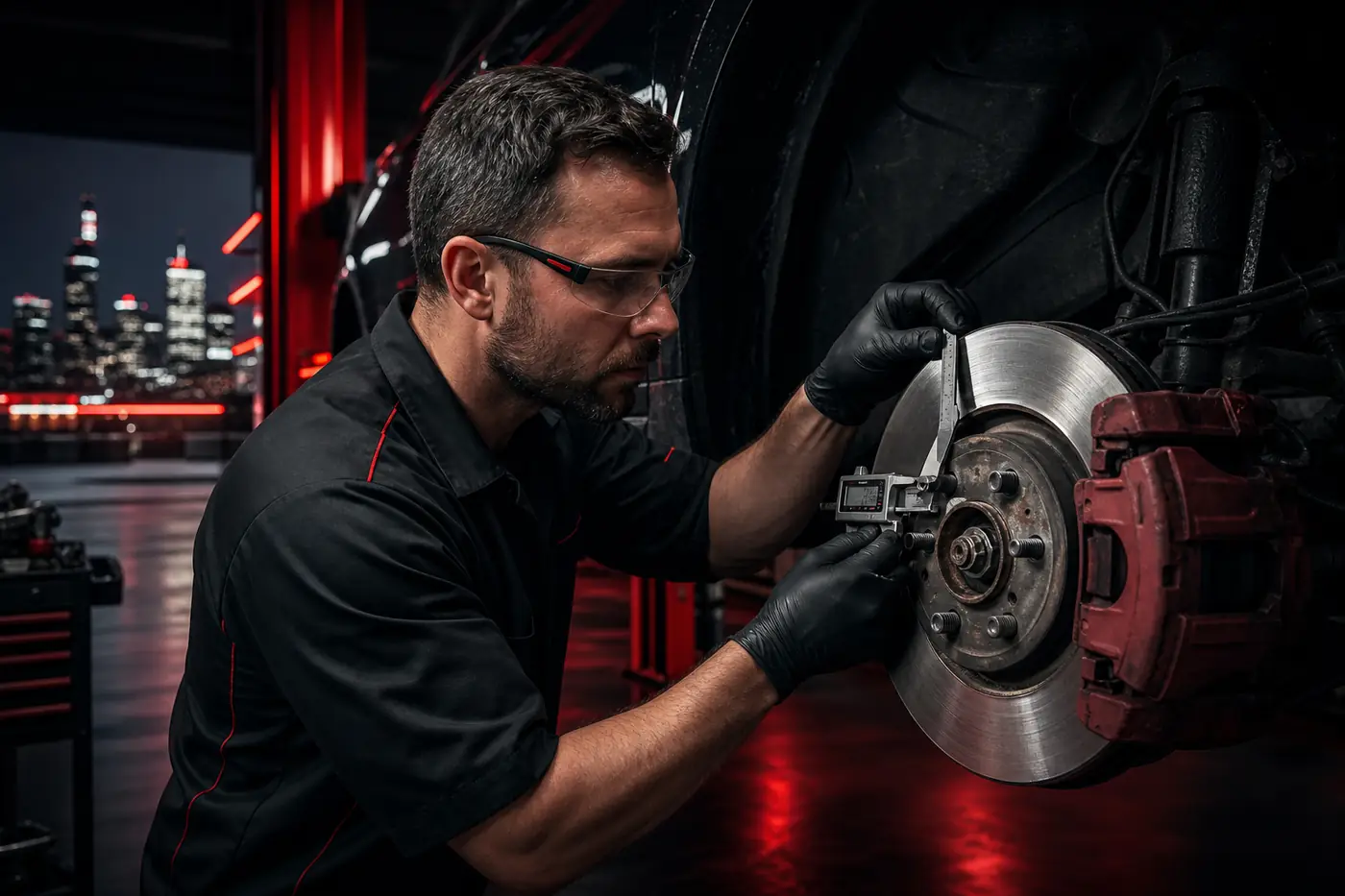
A thorough evaluation begins on a lift with the wheels removed when brake work is already planned. Technicians probe brake lines with a plastic tool—never a screwdriver—to gauge wall thickness without creating new damage. They follow exhaust paths from the manifold back, noting separated heat shields that buzz at idle. Subframe and cradle bolts get torque-checked when corrosion threatens thread integrity. On all-wheel-drive crossovers popular among West Wayne County families, transfer-case and differential breathers are inspected for seepage caused by rock-salt splash. Photos document severity so owners can prioritize repairs before a failed line strands them on the I-275 shoulder during rush hour.
Prevention That Fits a Downtown Plymouth Lifestyle
Garage parking helps but does not eliminate risk when the car arrives already wet. Drying the undercarriage with a leaf blower after heavy snow—awkward but effective—reduces standing water in pinch welds. Rubberized undercoating refreshed every five years on high-mileage vehicles slows perforation on known weak points. For those who keep classics near downtown car shows, storage on sealed floors with dehumidification outperforms any spray product alone. Fleet drivers serving Plymouth businesses should log undercarriage checks alongside oil intervals because stop-and-go delivery routes multiply exposure.
Insurance claims for rust-related brake line failures rarely compensate owners who deferred inspections; carriers treat corrosion as a maintenance issue, not an act of God. That financial reality pushes prudent Plymouth owners toward documentation—dated photos of line condition, advisor notes after each lift visit—especially before selling a vehicle to buyers from drier climates who may not expect Michigan undercarriages. Northville and Livonia shoppers at used-car lots along Plymouth Road increasingly ask for lift inspections for good reason: the same salt bath that preserves downtown charm on street lamps destroys steel on commuter cars parked five blocks away.
Wear Master Auto Super Center treats undercarriage care as part of responsible ownership for anyone who values both historic Plymouth streets and reliable commutes across Metro Detroit. Scheduling a fall and spring lift inspection turns invisible rust into a manageable maintenance line item rather than an emergency tow. The downtown you enjoy on foot deserves a vehicle underneath that is equally worth preserving.