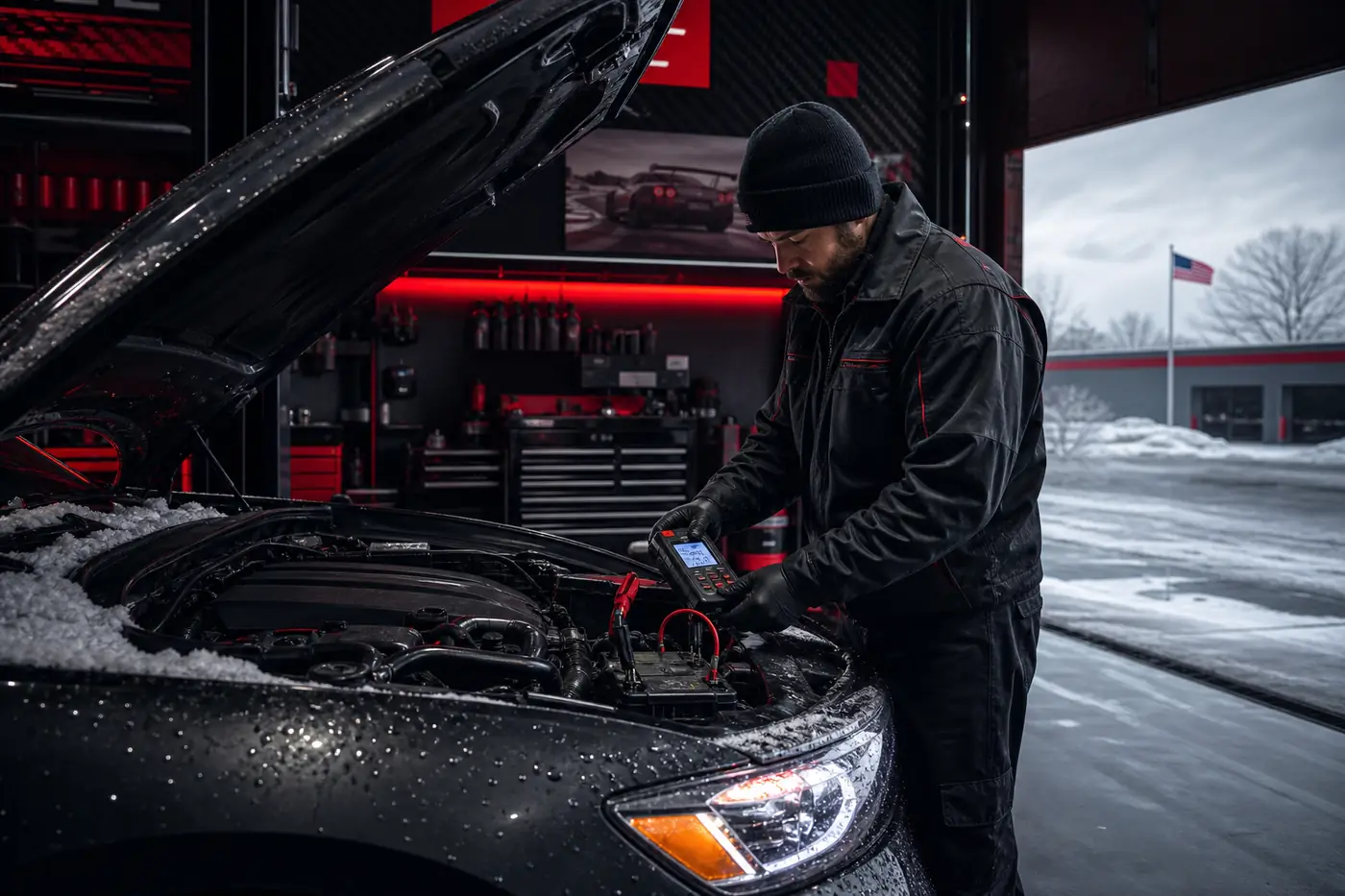

Why Canton AC Systems Fail in May — Right Before I-275 Gets Hot
Metro Detroit's first heat wave exposes air conditioning weaknesses that Michigan winters conveniently hide.
Michigan obliges its drivers to endure two thermal extremes, and the transition between them is where air conditioning systems fail most visibly. Through January and February, a weak AC compressor or a slow refrigerant leak bothers no one on the Ford Road crawl toward I-275. Then May arrives — sometimes April — and the first 85-degree afternoon turns a Canton commute into an endurance test. Shops along the Metro Detroit auto corridor see the pattern annually: a surge of appointments from drivers who discovered warm air where cold air belonged, usually during the week's hottest hour on the freeway.
What Winter Hides From Canton Drivers
Automotive air conditioning systems do not hibernate. The compressor clutch may cycle less in cold weather, but seals, hoses, and o-rings still expand and contract with temperature swings. Refrigerant escapes slowly through microscopic gaps that widen when materials age. By the time a Canton driver first reaches for the AC button in spring, the system may have lost enough charge that the low-pressure switch prevents compressor engagement to avoid damage — a protective silence that feels like a sudden failure but reflects months of gradual loss.
Condenser damage from winter road debris compounds the problem. The condenser sits behind the grille, exposed to stones, salt slurry, and the occasional piece of truck tread kicked up on I-275. A bent fin or a small puncture from a March pothole near the Ford Road interchange may not surface until demand for cooling peaks. Canton commuters who notice the cabin fan blowing but not cooling should treat that distinction as diagnostic: airflow without temperature change often points to refrigerant or compressor issues, not a simple fan failure.
Hybrid and electric vehicles add refrigerant circuits that cool both cabin and battery packs. A Canton family driving a hybrid SUV for school runs and I-275 commutes may find that AC underperformance affects more than comfort — it can influence battery thermal management during summer traffic jams near the Michigan Avenue exit. Diagnosis on these platforms requires equipment calibrated for the refrigerant type and pressure specifications the manufacturer mandates, another argument for spring testing at a shop equipped for modern systems.
The I-275 Commute as a Stress Test
Freeway driving in summer places sustained load on an AC system. At 70 miles per hour with ambient temperatures above 80, a compressor runs nearly continuously, and a marginal system cannot maintain cabin temperature. Drivers merging from Ford Road onto I-275 south toward the Michigan Avenue interchange often notice the decline first: cold air at idle in traffic, lukewarm air at speed. That symptom frequently indicates a weak compressor, condenser airflow restriction, or refrigerant charge low enough to perform in light demand but not under highway stress.
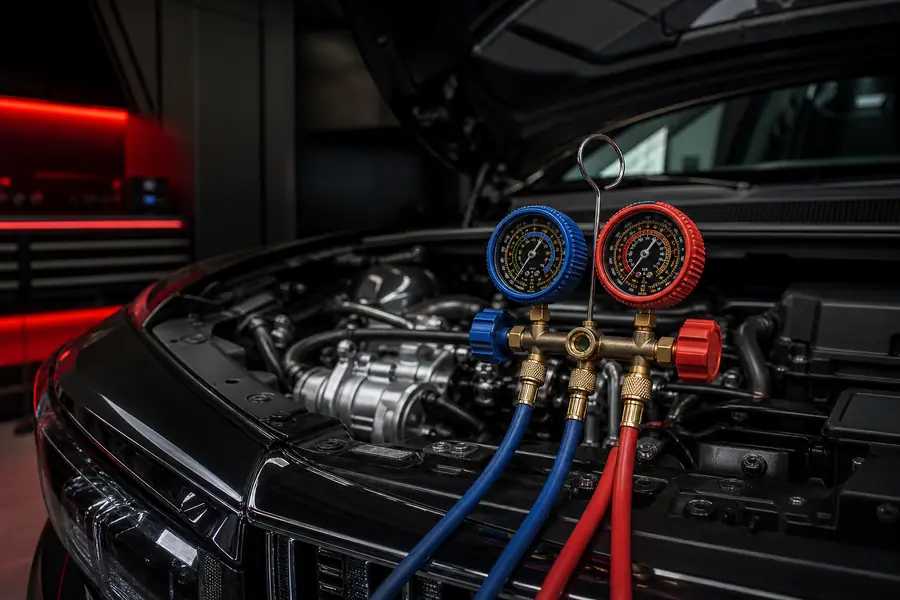
Modern refrigerants and sealed systems make DIY top-offs risky and often illegal without proper recovery equipment. A low charge usually signals a leak that will return within weeks regardless of how much refrigerant is added at a retail canister. Canton shops equipped with leak detectors, ultraviolet dye, and evacuation pumps address root cause rather than symptom — a distinction that saves repeat visits and protects the compressor from slugging damage that occurs when charge is wildly incorrect.
The worst day to discover a failing AC system is the first 90-degree afternoon on I-275 — which is precisely when most Canton drivers find out.
Cabin Filters and Airflow Before Refrigerant
Not every warm-cabin complaint requires a major repair. Cabin air filters clogged with pollen, dust, and the particulate that drifts across Canton in spring restrict airflow enough to make a healthy system feel weak. Replacing the cabin filter before summer costs a fraction of a full AC service and restores volume to the vents. Technicians typically check the filter during pre-season inspections, along with condenser condition, belt tension on the compressor, and evidence of refrigerant oil staining that signals a leak location.
Odors from the vents — musty, sweet, or chemical — indicate mold on the evaporator case, refrigerant leaks, or degraded cabin-filter media. Cherry Hill families who notice smells when the AC first engages after months of heat-only operation should mention them during spring service. Evaporator cleaning and disinfectant treatments restore air quality before children spend June afternoons in rear seats during Metro Detroit's humidity.
Scheduling Spring AC Testing in Canton
April and early May appointments carry a practical advantage: shops are quieter before the heat-wave rush, and repairs completed early prevent the scramble that follows the first heat advisory. A proper pre-season check measures vent temperature against ambient readings, verifies compressor clutch engagement, inspects the condenser for damage, and pressure-tests the system for leaks. For families who carpool from Cherry Hill to summer activities and for commuters who spend forty minutes on I-275 each afternoon, confirming AC performance in spring is less inconvenience than strategy.
Waiting-room stories repeat each June: the driver who postponed service because the cabin felt acceptable in April, then discovered compressor failure during the first ninety-degree week. Repair lead times stretch when every Canton shop faces the same surge. Spring scheduling converts a predictable seasonal need into a controlled appointment rather than an emergency competing with everyone else who waited for the heat to prove the point.
Michigan summers reward preparation. Canton drivers who address cooling systems while Ford Road still feels comfortable avoid the annual ritual of sweating through a backup appointment slot in June.
The system that cooled adequately last August may not survive another winter of seal contraction without attention. Refrigerant does not last forever, and compressor seals harden with age. Booking a spring appointment at a Canton shop before Memorial Day weekend — when demand surges across the Metro Detroit auto corridor — converts AC service from crisis response into seasonal routine. The freeway home in July offers no mercy for finding out too late.