Why Michigan Winters Kill Batteries Along the Ford Road Corridor
Subzero mornings on Ford Road expose a weakness most Canton commuters discover only when the engine refuses to turn over.
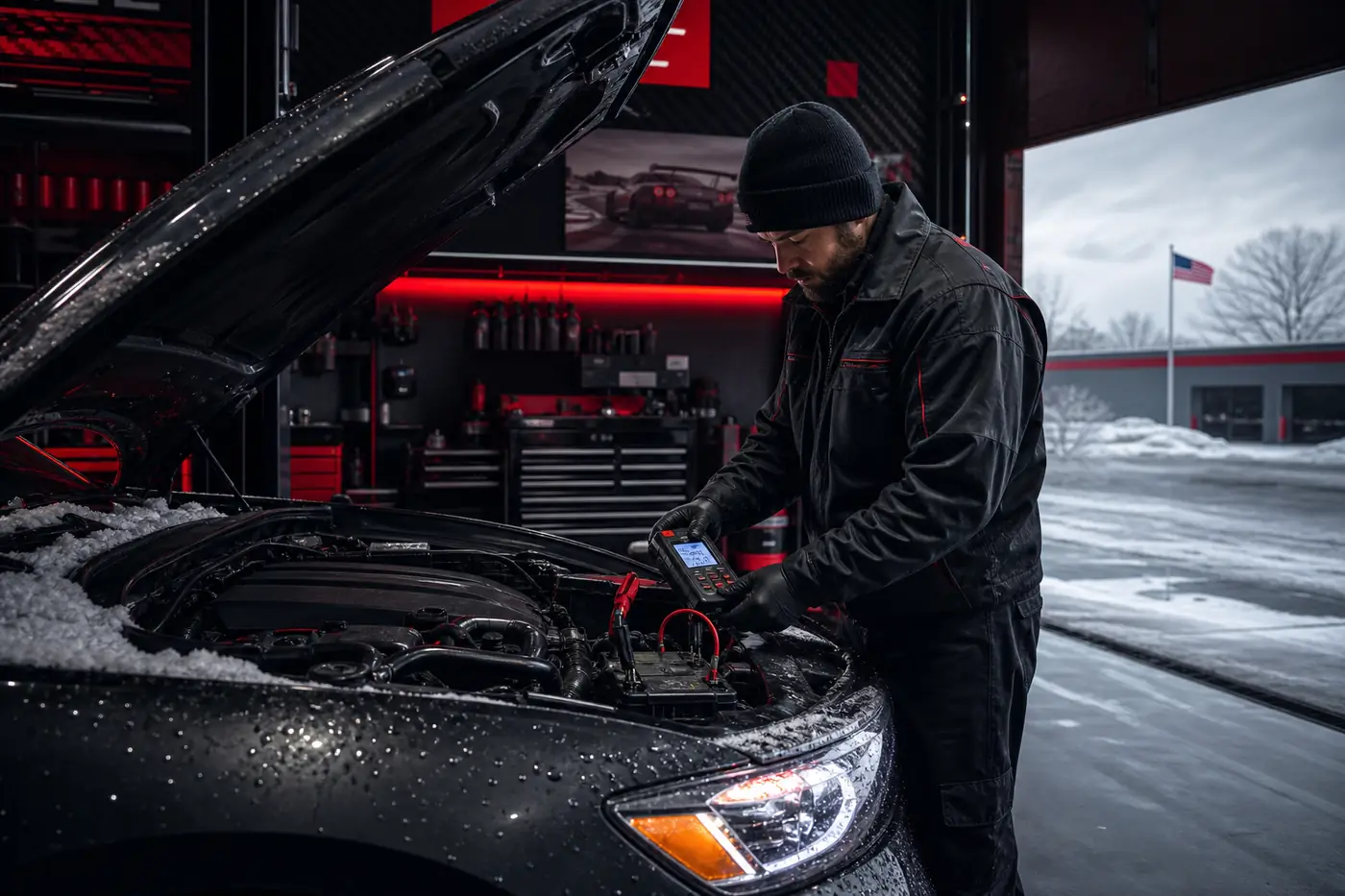
The first hard freeze does not announce itself on Ford Road. It arrives in parking lots outside Cherry Hill Village, in the driveways off Sheldon Road, and in the idling lines outside Canton-Plymouth High School — a chorus of starters grinding longer than they should. By the time most drivers in Canton Township notice the change, their battery has already spent weeks compensating for cold that saps cranking power with every degree the thermometer drops. Michigan winters do not merely test batteries. They expose the ones that were borderline in October and finished in January.
Cold Chemistry on a Commuter Corridor
A lead-acid battery relies on a chemical reaction that slows dramatically in cold weather. At 32 degrees Fahrenheit, a fully healthy battery may deliver only about two-thirds of its rated cranking amps. At zero degrees — a routine morning temperature across Metro Detroit from December through February — capacity can fall by nearly half. That math matters on the Ford Road corridor, where thousands of commuters merge onto I-275 each weekday before sunrise. Short trips between Canton, Westland, and Livonia compound the problem: alternators need sustained driving time to replenish what cold-starting drains, and a five-mile run to the Meijer on Ford Road rarely provides enough.
Stop-and-go traffic between Lotz Road and Haggerty adds another layer. Accessories running at idle — heated seats, defrosters, phone chargers — draw current while the alternator operates at low output. Over months, that pattern slowly depletes a weakening battery until the morning arrives when the starter receives just enough juice to click, not enough to spin the engine. Technicians along the Canton auto corridor see the spike every November: drivers who ignored slow cranking in October and now need a jump at 6:45 a.m. before the I-275 merge.
The Warning Signs Canton Drivers Miss
Battery failure rarely arrives without a preamble. Headlights that dim when the blower motor engages, a starter that hesitates before catching, or a dashboard clock that resets after overnight parking all point to voltage struggling to meet demand. Some newer vehicles mask the symptoms: intelligent charging systems compensate until they cannot, and then the failure feels sudden. Drivers who park outside along Warren Road or near the Cherry Hill strip should pay closer attention than garage-kept counterparts, because ambient cold accelerates sulfation in aging cells.
Group 24 and Group 35 batteries — common fitments on sedans and crossovers that dominate Canton parking structures — carry cold-cranking amp ratings that assume laboratory conditions, not a February dawn after overnight single-digit temperatures. Upgrading to a battery with higher reserve capacity makes sense for vehicles with start-stop technology, which cycles the starter more frequently in Ford Road traffic and demands robust recovery between events. Matching the correct group size and terminal orientation matters as much as cranking amps; an ill-fitting battery can leave terminals under stress and accelerate corrosion at the posts.
A battery that starts the car on a 40-degree afternoon may not survive a 5-degree sunrise on Ford Road — and that gap is where Canton winters separate marginally healthy cells from dead ones.
Age, Heat, and the Hidden Damage Cycle
Counterintuitive as it sounds, summer heat does much of the damage that winter reveals. High temperatures inside an engine bay — common during Metro Detroit heat waves — accelerate internal corrosion and electrolyte evaporation. A battery that survived three Julys in a Canton parking lot may test adequately in September and fail completely by February. Most manufacturers suggest replacement every three to five years in this climate, though vehicles with heavy electrical loads — remote starts, aftermarket lighting, rear-seat entertainment — may need attention sooner.
Fleet vehicles and rideshare drivers working the Ford Road-to-airport corridor often cycle through batteries faster than suburban garage queens for exactly these reasons: heat exposure during summer shifts, then relentless cold starts before dawn in January. Even private owners who leave vehicles outside at apartment complexes near Cherry Hill or along the Canton industrial parks east of I-275 see accelerated aging compared with neighbors who park indoors. Understanding that winter failure is frequently summer damage made visible helps Canton drivers time replacement proactively rather than reactively.
What a Proper Winter Battery Inspection Includes
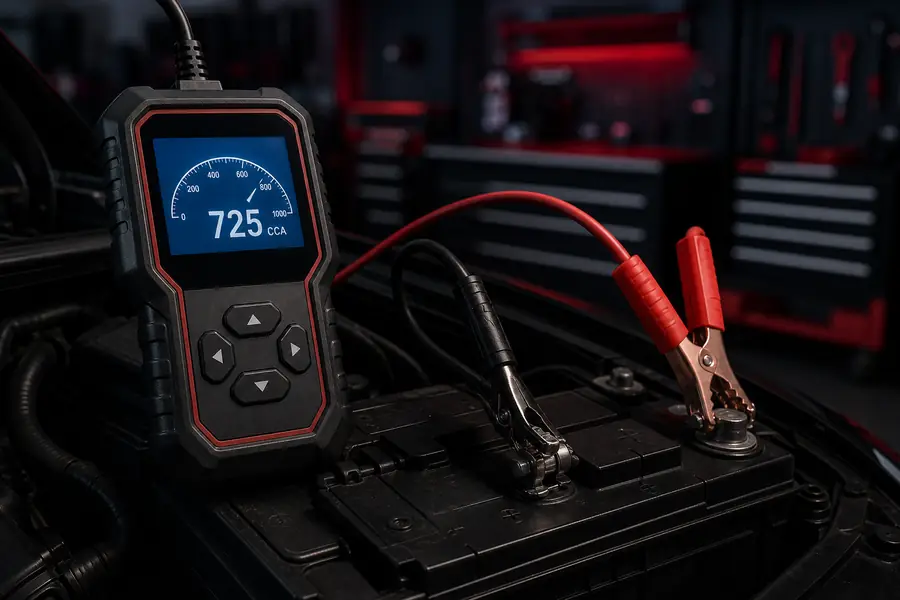
A voltage reading alone tells an incomplete story. Professional testing applies a simulated load that mimics starter demand and measures how well the battery holds voltage under stress. Technicians also inspect terminals for corrosion — the white or green buildup that increases resistance — and verify that cable connections are tight and clean. On the Ford Road corridor, where road salt accelerates terminal oxidation, cleaning and protecting connections can extend service life even when the battery itself remains sound.
Charging-system testing belongs in the same visit. A weak alternator or a slipping serpentine belt can mimic battery failure and leave a new battery undercharged within weeks. For commuters who depend on reliable morning starts before the I-275 run to Detroit or the Ann Arbor split, confirming that the entire electrical system works as designed is the difference between preventive maintenance and a tow from the Ford Road median.
Practical Steps Before the First Deep Freeze
Canton drivers who schedule battery testing in late October — before the sustained cold that defines Michigan winters — gain a clear picture of remaining capacity. If replacement is warranted, doing it on your schedule beats discovering the need in a grocery store parking lot off Ford Road. Keeping terminals clean, limiting short-trip patterns when possible, and parking in a garage or wind-sheltered spot all reduce winter strain.
Jumper cables and portable jump packs have their place, but neither addresses the underlying chemistry of a failing battery. Relying on jumps to stretch another month through a Canton winter risks stranding on a morning when no neighbor is awake and roadside assistance faces hour-long queues during the season's first Arctic blast. For those who cannot avoid the commuter rhythm that defines life along the I-275 corridor, a tested battery and verified charging system remain the most reliable insurance against a morning that starts with silence instead of an engine.