
A Pre-Purchase Inspection Guide for Buyers Near the Canton Auto Corridor
Used vehicles sold along Ford Road and across Metro Detroit deserve scrutiny that a test drive alone cannot provide.
The used-vehicle market along the Canton auto corridor moves quickly. Inventory turns at lots near Ford Road and I-275, private sellers list SUVs in Cherry Hill subdivisions on weekday evenings, and buyers from across Metro Detroit arrive with financing pre-approved and urgency in hand. A clean Carfax and a twenty-minute test drive around Canton Center satisfy most purchasers. They should not. A pre-purchase inspection by an independent technician — one with no stake in the sale — remains the most reliable way to learn what ownership will actually cost before keys change hands.
What a Test Drive Around Ford Road Cannot Reveal
Test drives are performances. Sellers warm engines beforehand. Routes avoid rough pavement and highway speeds that might expose vibration. Warning lights get dismissed as sensor glitches. A fifteen-minute loop through Canton Township proves little about transmission shift quality under sustained load, rear main seal seepage, or brake rotors worn below minimum thickness. Independent inspection lifts the vehicle, removes wheels, connects diagnostic tools, and evaluates systems without the seller narrating each finding.
Michigan's climate history matters for any used purchase. Underbody rust from salted I-275 winters, sun-damaged interiors from parking-lot summers, and suspension wear from Metro Detroit pothole seasons leave signatures that a trained inspector reads in minutes. Vehicles imported from southern states and sold locally may fare better underneath, but odometer fraud, deferred maintenance disguised by recent detailing, and accident repairs that never entered insurance records all occur within the same market Canton buyers shop.
Title branding, salvage history, and lien status belong in the same due-diligence conversation as mechanical inspection. A clean mechanical report on a vehicle with a reconstructed title still carries resale and insurance implications that Canton buyers should understand before negotiating. Local Secretary of State offices in Wayne County process title transfers daily; confirming VIN consistency across title, registration, and the physical dashboard plate prevents surprises at the counter on Ford Road after the deal is done.
Core Elements of a Professional PPI
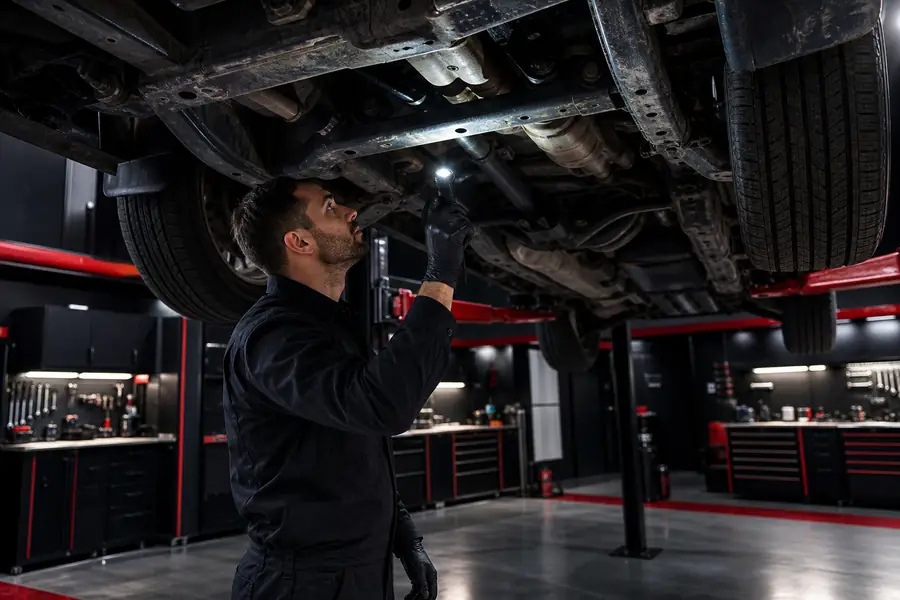
A thorough pre-purchase inspection examines engine mechanical health through compression or leak-down testing when warranted, scans for stored and pending diagnostic trouble codes, assesses transmission shift behavior and fluid condition, measures brake pad and rotor thickness, evaluates tire age and tread wear patterns, inspects suspension and steering components for play, checks for fluid leaks at common failure points, and reviews maintenance history against manufacturer requirements. On the Ford Road corridor, shops familiar with the models popular among Canton families — domestic SUVs, Japanese sedans, Korean crossovers — bring pattern recognition that speeds accurate assessment.
Timing belt and chain-driven engines carry different inspection priorities. A timing belt approaching its mileage or age interval on a used sedan sold in Canton may represent an imminent thousand-dollar service that a casual buyer overlooks. Chain-driven engines are not maintenance-free — tensioners and guides wear — but the inspection focus shifts to noise and diagnostic data rather than calendar replacement. Transmission fluid color, smell, and shift quality on test drives through local traffic reveal more than highway-only evaluations conducted on open roads west of Metro Detroit.
A $150 inspection that prevents a $4,000 transmission purchase is not an expense. It is the cheapest insurance available in the Canton used-car market.
Negotiating With Inspection Results in Hand
Inspection findings translate directly into purchase leverage. Documented brake wear, imminent timing belt service, or seeping valve cover gaskets give buyers factual grounds to renegotiate price or request seller remediation before closing. Some issues — frame rust, flood damage evidence, structural collision repair — warrant walking away regardless of price. Others — consumable wear items, deferred fluid services — simply clarify the true cost of entry. Canton buyers who budget for disclosed repairs avoid the resentment that follows surprise invoices in the first month of ownership.
Written inspection reports carry weight in negotiations because they replace opinion with measurement. Pad thickness in millimeters, tire tread depth, leak location, and diagnostic trouble codes documented on shop letterhead give buyers standing that a verbal concern cannot match. Sellers who refuse independent inspection access often know what a lift would reveal. In the Canton used-vehicle market — where commuting reliability on I-275 is non-negotiable for most purchasers — that refusal is itself a data point.
Timing and Logistics Near Canton
Schedule inspections after initial interest is established but before purchase commitment. Most sellers with legitimate vehicles accommodate a buyer's request to visit a nearby shop. Canton buyers benefit from a dense cluster of service facilities along Ford Road, making same-day appointments feasible when a promising vehicle appears. Bring the seller's contact information, the vehicle identification number, and any maintenance records provided. Allow ninety minutes for a comprehensive evaluation.
Deposit and hold agreements should specify inspection contingency in writing. Canton buyers who place refundable holds pending PPI results protect themselves when the seller accepts a higher offer during the inspection window. Clarifying who pays inspection cost, whether the seller may observe on the lift, and what outcomes trigger renegotiation versus walk-away prevents friction that wastes time for both parties and the shop performing the evaluation.
Private-party sales demand particular caution. No warranty accompanies the handshake in a Cherry Hill driveway. Dealer sales include limited protections but still benefit from independent verification — especially on certified pre-owned units where the certification scope may exclude wear items inspectors routinely flag.
Post-purchase, the inspection baseline becomes a maintenance roadmap. Knowing that brakes have thirty percent pad life remaining or that coolant was flushed recently helps new owners schedule Canton service without redundant work. For anyone investing in transportation that will carry children to Canton schools or commute daily to I-275, pre-purchase inspection is the step that converts optimism into informed commitment — and the Ford Road corridor offers no shortage of shops equipped to provide it.