

Pothole Season Hits Canton: Suspension and Alignment Warning Signs
Freeze-thaw cycles fracture Metro Detroit roads each spring, and Canton Township drivers pay the price in bent wheels and worn shocks.
Spring in Canton Township arrives with cherry blossoms and cracked asphalt. The same freeze-thaw cycle that heaves Michigan driveways each March fractures the pavement on Ford Road, Warren Road, and the arterial connectors feeding I-275. Drivers who survived winter without incident often meet pothole season in April — a jolt through the steering wheel, a new vibration at highway speed, a tire that holds air but no longer sits true. Suspension and alignment damage from potholes rarely disables a vehicle immediately. It erodes handling, consumes tires, and compounds quietly until the repair bill reflects neglect as much as impact.
How a Single Impact Reaches the Alignment Rack
A pothole strike transfers force through the tire sidewall into the wheel, then into control arms, tie rods, struts, and the steering knuckle. Alignment angles — camber, caster, toe — measured in fractions of a degree, shift with enough impact to accelerate tire wear within weeks. Canton drivers who hit a crater at speed near the Cherry Hill intersection or in construction zones along I-275 off-ramps may notice a pull to one side within days. Others feel only a vague looseness in steering that they attribute to road conditions rather than geometry knocked out of specification.
Repeated minor impacts produce cumulative damage that no single event triggers for inspection. Subdivision streets after plow season develop lip edges where patches settle. Parking lots near Canton retail centers collect water that undermines subbase and collapses in chunks. Vehicles that navigate these surfaces daily — school-run SUVs, Ford Road commuters, delivery vans serving the Metro Detroit corridor — absorb thousands of small shocks that fatigue ball joints, wear bushings, and loosen components designed to flex, not endure indefinite pounding.
Michigan's Act 51 road funding cycle means some Canton corridors see resurfacing on schedule while others wait years between meaningful repairs. Drivers who memorize pothole locations on the school-run route may still strike new craters after each freeze-thaw weekend. Lowering speed through construction zones near I-275 and avoiding standing water that hides depth are practical habits, but they cannot eliminate the structural toll that Metro Detroit pavement exacts on steering and suspension components each spring.
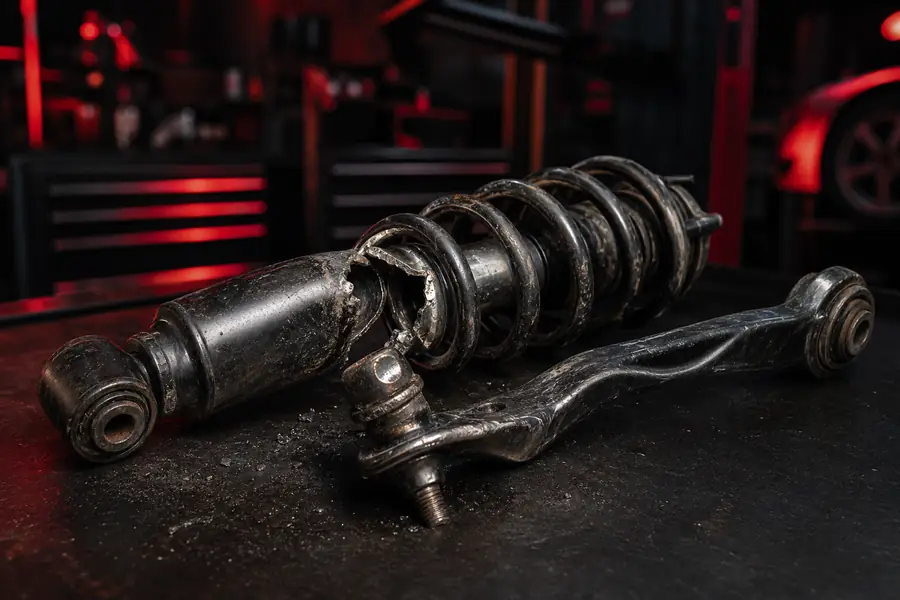
Symptoms Worth a Suspension Inspection
Uneven tire wear — feathering on one edge, bald strips on the inside shoulder — often precedes any steering complaint. A vehicle that drifts right on a flat stretch of Ford Road despite a centered wheel needs alignment attention even if the driver has grown accustomed to the correction. Clunking over small bumps suggests worn stabilizer links or loose control arm bushings. Vibration through the steering wheel at 55 to 65 miles per hour on I-275 may indicate a bent wheel or tire out of round after impact, not merely an unbalanced tire.
Wheel inspections belong beside suspension checks after any significant impact. Canton drivers who strike potholes at speed should examine rims for cracks and tires for bulges before resuming the I-275 commute. A bent wheel may hold air while vibrating at highway speed, masking structural damage until failure at the bead. Road-force balancing can sometimes compensate for minor roundness issues, but replacement is the safer path when deformation exceeds manufacturer tolerances.
Pothole damage is rarely dramatic. It announces itself in tire wear patterns and steering corrections that Canton drivers mistake for normal until the next set of tires wears out in half the expected miles.
Struts, Shocks, and the Bounce Test Myth
Worn shock absorbers and struts allow wheels to lose contact with pavement over uneven surfaces, extending stopping distance and reducing stability in emergency maneuvers. The old bounce test — pushing down on a fender and counting oscillations — offers a rough indicator at best. Professional inspection examines leak evidence, bushing condition at mounting points, and ride-height consistency side to side. Canton vehicles that bottom out audibly on moderate bumps or continue oscillating after a pothole have likely exceeded the damping capacity of worn components.
Tire investment makes suspension neglect expensive in a second way. A set of quality all-season tires mounted at a Canton shop can lose thousands of miles of usable tread when camber angles push the inside edge into premature wear. Rotating tires every six months helps distribute damage but cannot correct geometry. Drivers who replace tires every two years on the Ford Road commute should ask whether alignment — not driving habits — is the hidden cause.
When Alignment Alone Is Not Enough
Alignment adjusts angles within the range that suspension components permit. Bent control arms, damaged steering racks, or wheels with structural deformation cannot be corrected at the alignment rack alone. Technicians along the Canton auto corridor inspect hardware before adjusting angles, because aligning a vehicle with bent parts delivers numbers within specification at rest and chaos in motion. Replacing a damaged component first restores the foundation that alignment depends on.
Four-wheel alignment on all-wheel-drive SUVs and crossovers common in Cherry Hill driveways requires equipment that measures thrust angle and rear geometry, not just front toe. A shop accustomed to Canton commuter vehicles understands which platforms need four-corner correction after pothole strikes and which tolerate front-only adjustment. That distinction prevents paying for incomplete service that leaves rear toe misaligned and tires feathering within a month.
Spring pothole season rewards Canton drivers who inspect early — after the first major thaw, before summer travel puts heavy miles on compromised suspension. A post-impact check following any hard strike, plus annual alignment verification for commuter vehicles, protects tire investment and handling confidence.
Insurance claims for pothole damage require documentation — photos, location, police or road-authority reports when available. Keeping repair invoices from a Ford Road-area shop establishes a record that supports reimbursement when Wayne County or Canton Township maintenance jurisdictions apply. Even when claims fail, documented repairs preserve resale transparency. Handling confidence on the route to I-275 depends on suspension components few drivers see — until a pothole season makes them impossible to ignore.