Stop-and-Go Traffic Is Quietly Wearing Out Canton Commuters' Brakes
The daily crawl from Cherry Hill to I-275 demands more from brake pads than highway miles ever will.
Every brake pad in Canton Township earns its retirement differently, but few work as hard as the ones gripping rotors on a Ford Road commute. The corridor between Haggerty and Lilley carries a volume of traffic that turns smooth-flowing mornings into a sequence of hard stops: school zones near Canton Center, signal cycles at Beck Road, the perpetual slowdown approaching the I-275 interchange. Brake wear from that pattern does not announce itself with drama. It accumulates in fractions of a millimeter per stop until one morning the pedal feels soft, the steering wheel shudders, or a metallic scrape replaces the quiet confidence drivers expect.
Why Urban Stops Destroy Pad Life
Brake pads convert kinetic energy into heat through friction. Highway braking spreads that heat across longer, gentler applications. Stop-and-go commuting concentrates it into repeated hard events at low speed — the exact rhythm of a Cherry Hill-to-Ford Road run. Each stop from 35 miles per hour to zero generates more heat per mile than a single deceleration from 70 on I-275. Heat cycles fatigue pad material, glaze rotors, and accelerate wear on caliper slides that must flex with every application.
Traffic density amplifies the effect. Canton commuters who leave between 7:15 and 8:00 a.m. often travel the same two-mile stretch for twenty minutes, braking dozens of times before reaching the freeway on-ramp. Delivery trucks, school buses, and Michigan left turns at major intersections add unpredictable stops that force harder pedal pressure. Over a year of weekday driving, that pattern can consume pad material twice as fast as the odometer alone would suggest.
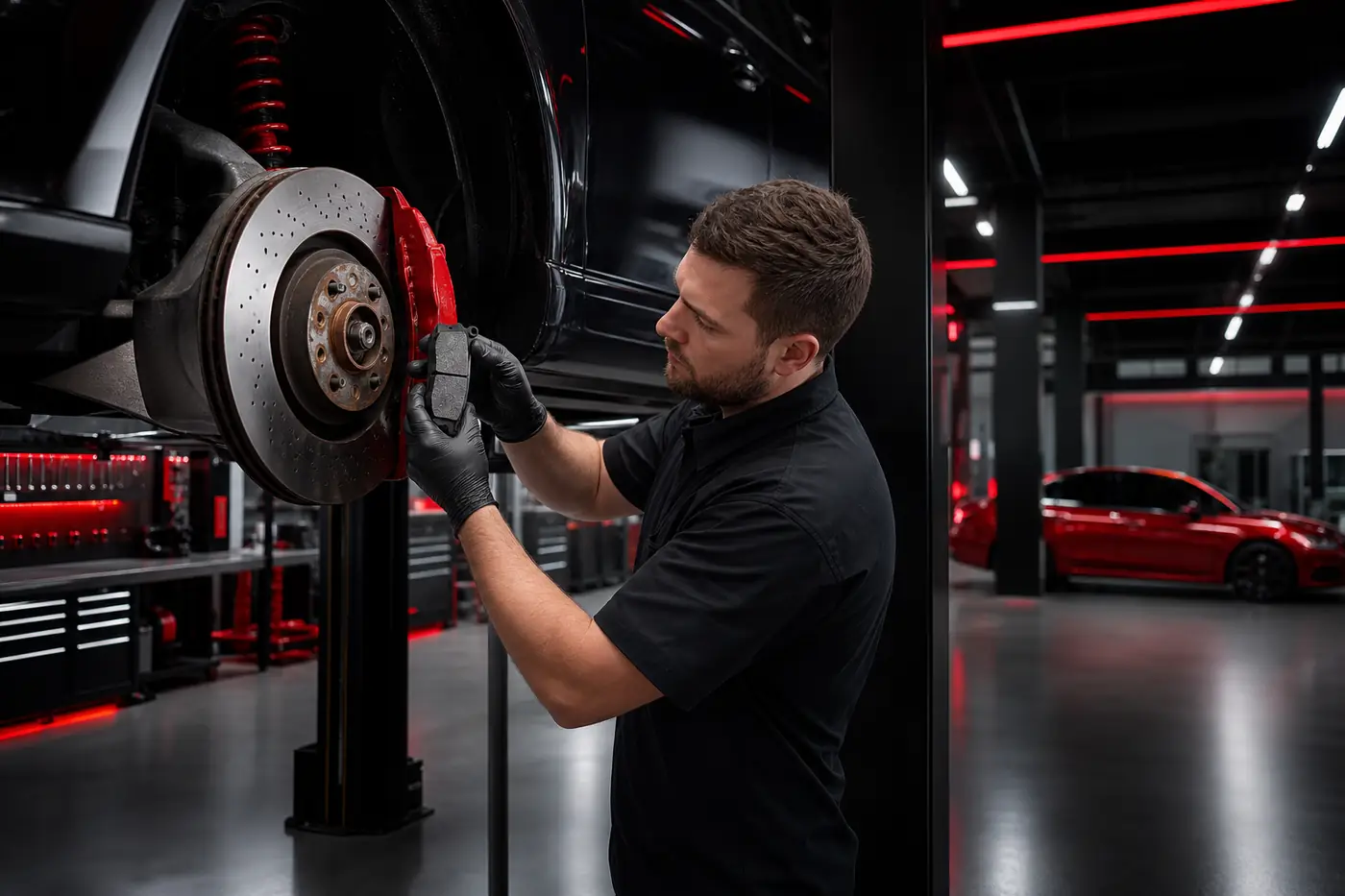
Rear brake wear on front-wheel-drive sedans — the dominant commuter configuration in Metro Detroit — often surprises owners who assume the front pads do all the work. Electronic brake distribution sends significant force to rear wheels during moderate stops, and parking brake usage in hilly Cherry Hill subdivisions adds wear to rear drum or disc assemblies. A comprehensive inspection evaluates all four corners, not only the fronts that drivers associate with squealing.
Symptoms Canton Drivers Should Not Ignore
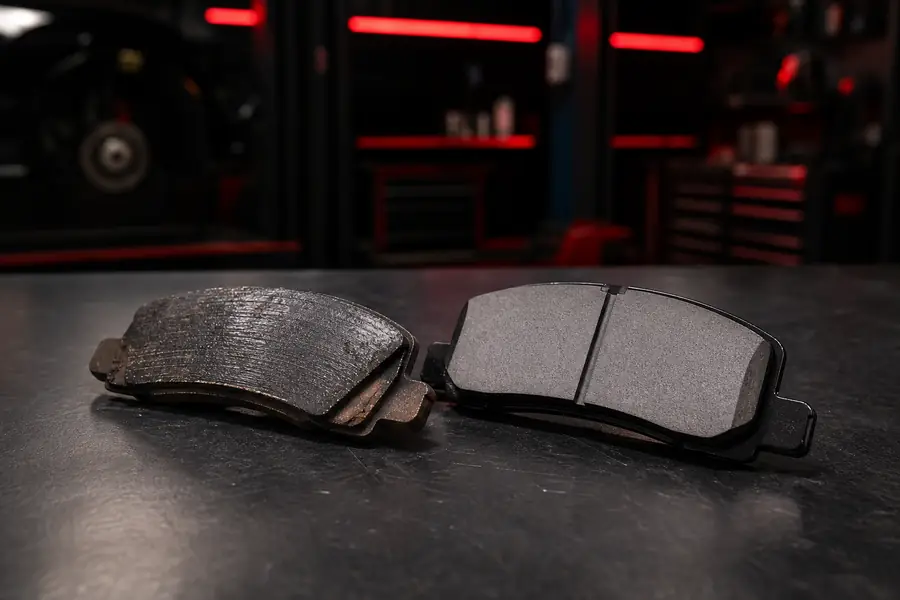
A high-pitched squeal during light braking often means wear indicators are contacting the rotor — a deliberate warning built into the pad. A deeper grinding sound indicates the pad material has worn through, and metal backing is scoring the rotor surface. Pedal pulsation on moderate stops usually signals rotor thickness variation from heat distortion, common on vehicles that see heavy stop-and-go duty. A brake pedal that travels farther than usual before engaging may point to fluid issues, air in the lines, or pads worn beyond safe limits.
Winter salt brine sprayed across Canton Township roads from November through March corrodes caliper brackets and hardware faster than drivers in drier climates expect. A brake inspection in early spring — after the worst of salt season but before summer travel — catches seized pins and corroded lines before they turn a pad replacement into a four-corner overhaul. The cost of catching wear at four millimeters versus waiting for metal-on-metal contact is measured in hundreds of dollars and, more importantly, in stopping distance when a school bus merges ahead on Ford Road without warning.
On Ford Road, brake wear is measured in traffic lights, not miles — and most Canton commuters pass more signals in a week than their odometer suggests.
Rotors, Fluid, and the Full System
Pad replacement alone does not always restore braking confidence. Rotors worn below minimum thickness, scored from deferred maintenance, or warped from heat cannot provide a clean friction surface. Brake fluid absorbs moisture over time, lowering its boiling point and encouraging corrosion inside calipers and lines. In Metro Detroit's salt-season climate, caliper slide pins seize more readily on vehicles that sit in damp conditions between short trips — precisely the usage pattern common among Canton school-run and commuter vehicles.
ABS and traction-control systems add complexity that a visual pad check cannot assess. Wheel-speed sensors and hydraulic modulators depend on clean fluid and unrestricted line pressure. When brake warning lights illuminate on the dash during a Ford Road commute, the cause may trace to a sensor fault rather than pad wear — but only diagnostic scanning separates the two. Addressing pad wear while ignoring fluid condition or seized hardware produces a repair that feels incomplete within weeks.
Inspection Intervals for Corridor Commuters
Manufacturer recommendations often assume a mix of city and highway driving. Ford Road commuters skew heavily toward the city side of that equation. Annual brake inspections — or review at every tire rotation — give technicians a chance to measure pad thickness, check rotor condition, and verify caliper movement before metal-on-metal contact damages rotors beyond resurfacing. Catching wear at four millimeters of pad material remaining typically allows planned replacement. Waiting until grinding begins often doubles the repair cost.
Fleet managers for Metro Detroit delivery services already budget brake service quarterly for vehicles assigned to urban routes. Private commuters on the same roads benefit from adopting a similar mindset even without a spreadsheet — treating brakes as a consumable tied to calendar and corridor severity rather than to a single mileage threshold that assumed a different driving life entirely.
For drivers who merge onto I-275 daily, brake confidence is not abstract. It is the ability to modulate speed in a tight merge lane, to stop cleanly in a sudden backup near the Michigan Avenue exit, to deliver children to Cherry Hill schools without wondering whether the pedal will respond.
Quality brake components calibrated for commuter duty — ceramic formulations that reduce dust, hardware kits that restore caliper slide, fresh fluid that resists moisture absorption — cost marginally more than budget pads but deliver consistent pedal feel across temperature swings that define Michigan driving. Canton shops along the Ford Road corridor stock options suited to both the heavy SUV that hauls lacrosse gear and the sedan that makes the daily I-275 run. Stop-and-go traffic makes brake maintenance less optional than the schedule in the owner's manual might imply — and more a function of how, not just how far, a vehicle is driven.