The School-Run SUV: Keeping Canton Families Moving Reliably
Short trips to Cherry Hill schools and Canton parks punish SUVs differently than cross-country highway miles.
The school run does not register on most maintenance schedules as a driving condition. Yet for thousands of Canton families, the morning loop — house to Cherry Hill elementary, past the library on Canton Center, maybe a stop at the Ford Road Kroger before home again — defines how their SUV ages. Three miles there, three miles back, engine cold at departure, idle time in the pickup lane, cargo weight that shifts with sports seasons. Multiplied across a Michigan school year, that pattern produces a vehicle with low highway miles and high mechanical demand, a combination that confounds both resale value and repair planning.
The Short-Trip Penalty on Engine Oil
Combustion engines produce moisture and acidic byproducts that oil is designed to hold in suspension until the engine reaches full operating temperature and evaporates the water. Short school-run trips rarely allow that cycle to complete. Condensation accumulates. Oil breaks down faster than mileage-based intervals assume. For SUVs that never reach sustained highway speed between oil changes, time-based maintenance — every six months regardless of miles — often serves Canton families better than waiting for the dashboard reminder tied to distance alone.
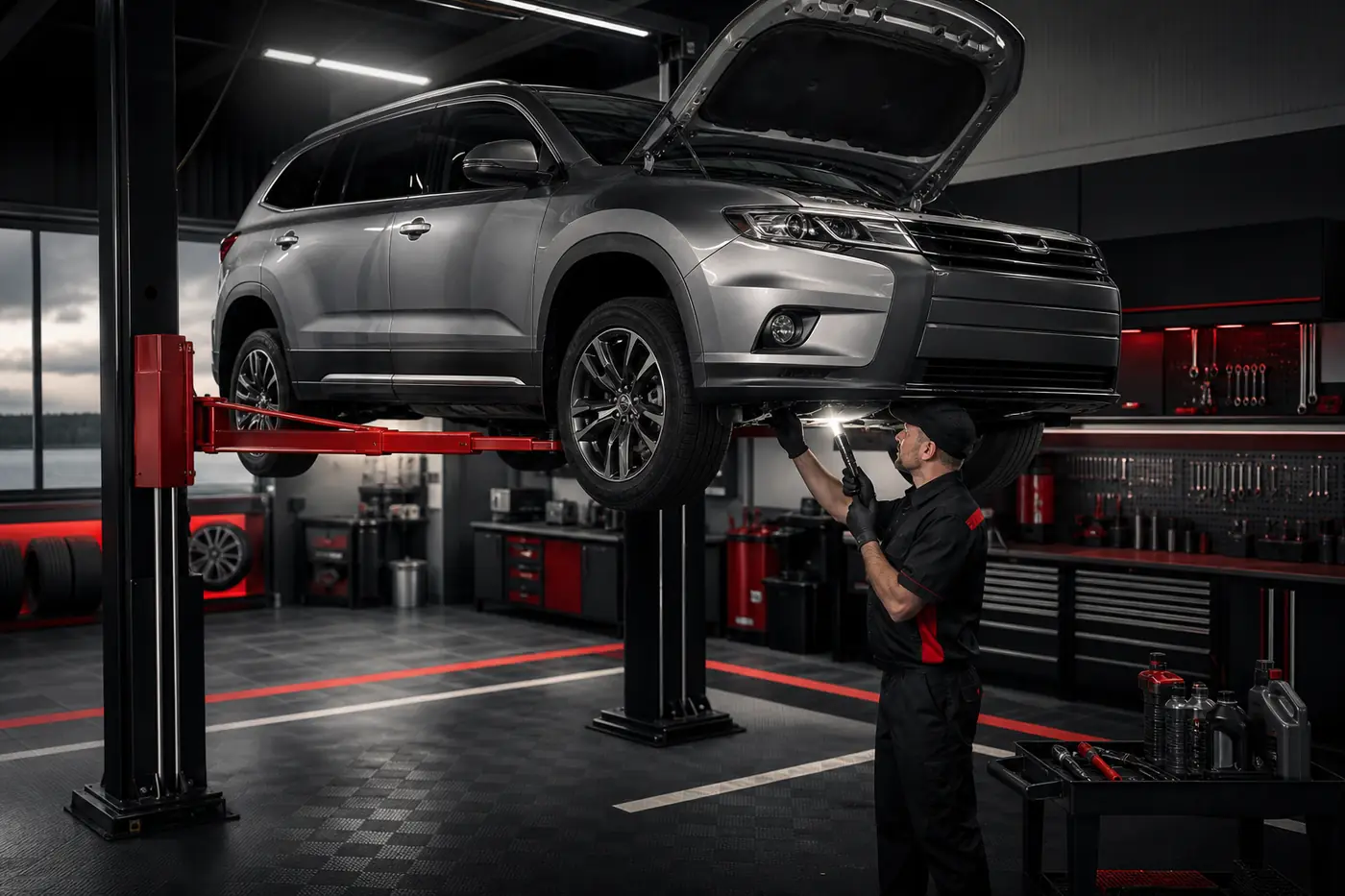
Ford Explorer, Chevrolet Traverse, Toyota Highlander, and Jeep Grand Cherokee models fill parking lots outside Independence Elementary and Discovery Middle School. Their larger engines and heavier curb weights demand full warm-up before load. Idling in February pickup lines while the defroster runs does not warm oil to operating temperature. Technicians along the Canton auto corridor regularly find sludge-prone conditions in SUVs with impeccable service records by mileage — because the records did not account for how those miles were accumulated.
Synthetic oil extends the margin for short-trip abuse but does not eliminate it. Even premium formulations lose protective properties when moisture contamination exceeds what heat cycles can purge. Canton families who switch to synthetic before winter — a common recommendation at shops along Ford Road — gain cold-start flow advantages but should still adhere to calendar-based changes when school-run miles accumulate slowly. The sticker in the windshield that reads six thousand miles means little when six months pass with most trips under two miles.
Tires, Brakes, and the Weight of After-School Gear
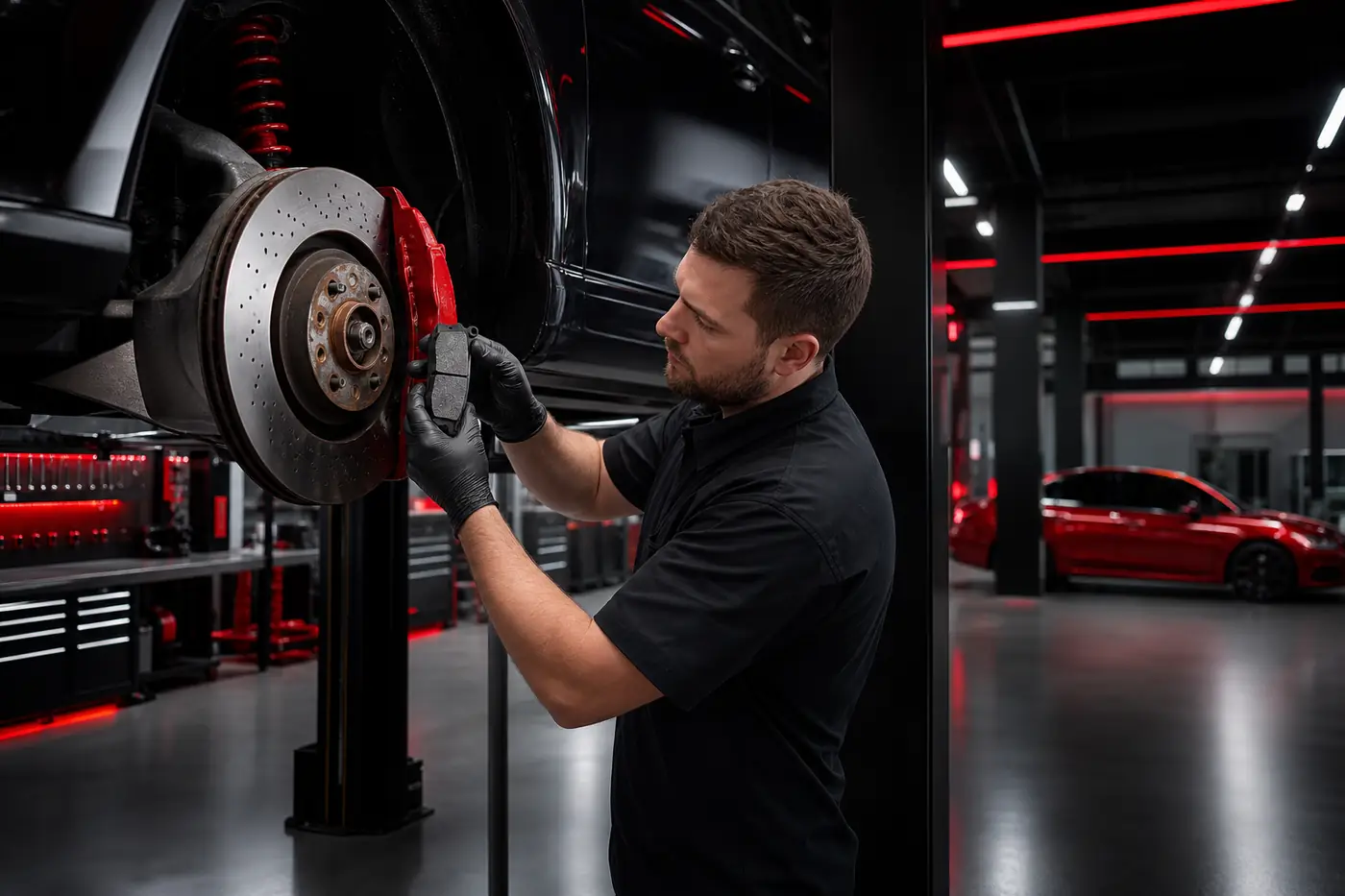
An SUV loaded with hockey equipment, science fair projects, and two car seats carries weight that accelerates tire wear and increases stopping distance. Canton subdivision streets — wide, well-maintained, but punctuated by speed bumps near parks and schools — force frequent braking from low speed. Tire pressure drops in cold weather, worsening fuel economy and handling during the winter school season. Monthly pressure checks and rotation every six months help ensure even wear across all four corners, particularly on all-wheel-drive models common in Metro Detroit driveways.
Door-jamb placards specify load and pressure ratings that many Canton parents exceed on tournament weekends without adjusting tire pressure accordingly. Underinflated tires flex excessively, generate heat, and wear shoulder blocks prematurely — a pattern technicians recognize on SUVs that never leave the school-run radius but carry variable cargo weekly. A five-minute pressure check during Saturday fuel stops at the Ford Road corridor stations costs nothing and extends tire life across a Michigan year that swings from ice to ninety-degree humidity.
A school-run SUV may log fewer miles than a commuter sedan but work harder every one of them — and maintenance intervals should reflect that reality.
Battery and Electrical Load in the Pickup Lane
SUVs idling in school pickup queues draw current for rear climate zones, entertainment screens, and phone chargers while the engine runs below optimal charging rpm. Combined with cold-morning starts across a Canton winter, electrical systems on family haulers face strain that solo commuter cars avoid. Battery testing each fall, before the first sustained freeze, prevents the scenario every parent dreads: a dead engine in a line of waiting vehicles outside a Cherry Hill school, children in the back seat, the bell about to ring.
Coolant and transmission fluid deserve the same calendar discipline as engine oil. All-wheel-drive SUVs popular in Canton driveways rely on transfer-case and differential fluids that manufacturers specify for interval replacement — intervals that school-run mileage may never trigger. A vehicle with forty thousand odometer miles but four years of Canton school loops may need fluid services the dashboard never prompts. Spring and fall transitions, when temperatures swing from freezing mornings to mild afternoons, stress cooling systems that sit under load during pickup idling.
Alignment, Suspension, and Subdivision Roads
Canton Township maintains its residential streets well, but speed bumps, cul-de-sac turns, and the occasional pothole after plowing season take a toll on alignment and suspension components. SUVs with higher center of gravity transmit road impacts differently than sedans. Wandering steering, uneven tire wear on the inside edge, or a drift toward the shoulder on Ford Road often trace back to alignment angles knocked out of spec by cumulative small impacts rather than a single dramatic event.
Multi-vehicle households should track maintenance per car rather than assuming identical schedules. The sedan assigned to a downtown Detroit commute via I-275 may need oil changes twice as often as the SUV making four-mile school loops, even when both display similar odometer readings. Canton families who label keys by vehicle and service history reduce the confusion that leads to deferred work on the car that needs it most.
Families who treat the school run as a distinct driving category — scheduling oil changes by calendar as well as mileage, rotating tires before winter, testing batteries in October, and requesting brake inspections annually — tend to avoid the breakdowns that cluster around holiday breaks and spring sports seasons.
Documentation matters when resale time arrives. Service records from a Canton shop that note school-run usage help the next owner understand why fluids were changed at lower mileage than expected. Reliability for Canton school-run SUVs is less about the brand on the grille than about maintenance matched to how the vehicle actually lives between Cherry Hill, Canton Center, and home — and about technicians who read mileage in context rather than in isolation.